Table Of Content
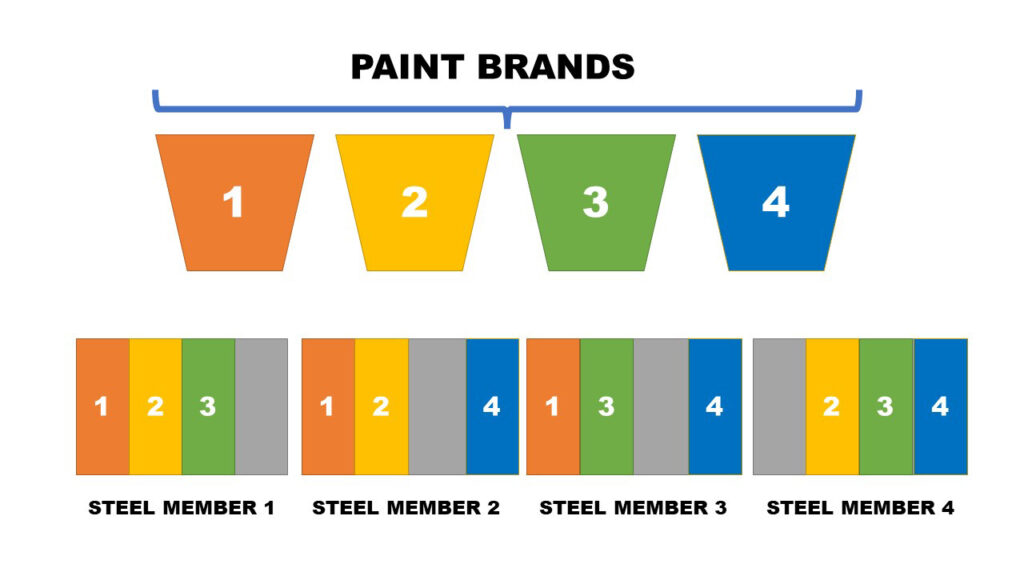
Unfortunately nuisance variables often arise in experimental studies, which are variables that effect the relationship between the explanatory and response variable but are of no interest to researchers. We use the usual aov function with a model including the two main effectsblock and variety. It is good practice to write the block factor first; incase of unbalanced data, we would get the effect of variety adjusted for blockin the sequential type I output of summary, see Section 4.2.5and also Chapter 8. Assume that we can divide our experimental units into \(r\) groups, also known asblocks, containing \(g\) experimental units each.Think for example of an agricultural experiment at \(r\) different locationshaving \(g\) different plots of land each.
Symmetric 2-designs (SBIBDs)
Typical block factors are location (see example above), day (if an experiment isrun on multiple days), machine operator (if different operators are needed forthe experiment), subjects, etc. Unfortunately the above model isn’t correct because R isn’t smart enough to understand that the levels of plot and subplot are exact matches to the Variety and Fertilizer levels. As a result if I defined the model above, the degrees of freedom will be all wrong because there is too much nesting.
Designer industry statistics
So what types of variables might you need to balance across your treatment groups? Blocking is most commonly used when you have at least one nuisance variable. A nuisance variable is an extraneous variable that is known to affect your outcome variable that you cannot otherwise control for in your experiment design. If nuisance variables are not evenly balanced across your treatment groups then it can be difficult to determine whether a difference in the outcome variable across treatment groups is due to the treatment or the nuisance variable.
Table of Contents

Since your business’s website is often the first impression that many customers have of your company, it’s easy to understand why the design of your website is so important. Overall, graphic design has been regarded as one of the most important parts of any business’s online presence. It has proven multiple times to be essential in attracting the eyes of prospective customers and clients, and a lot of that is based on psychology and human nature.
An Experimental Design Example
Cap_able blocks facial recognition software with knitted clothing - Dezeen
Cap_able blocks facial recognition software with knitted clothing.
Posted: Tue, 07 Feb 2023 08:00:00 GMT [source]
In each field, we will plant all three varieties so that we can tell the difference between varieties without the block effect of field confounding our inference. An ANOVA table provides all the information an experimenter needs to (1) test hypotheses and (2) assess the magnitude of treatment effects. By randomly assigning individuals to either the new diet or the standard diet, researchers can maximize the chances that the overall level of discipline of individuals between the two groups is roughly equal. By doing this, the variation within each block would be much lower compared to the variation among all individuals and we would be able to gain a better understanding of how the new diet affects weight loss while controlling for gender. A farmer possesses five plots of land where he wishes to cultivate corn. He wants to run an experiment since he has two kinds of corn and two types of fertilizer.
Designer demographics and statistics in the US
In the first example provided above, the sex of the patient would be a nuisance variable. For example, consider if the drug was a diet pill and the researchers wanted to test the effect of the diet pills on weight loss. The explanatory variable is the diet pill and the response variable is the amount of weight loss. Although the sex of the patient is not the main focus of the experiment—the effect of the drug is—it is possible that the sex of the individual will affect the amount of weight lost. Here are the main steps you need to take in order to implement blocking in your experimental design. Blocking is one of those concepts that can be difficult to grasp even if you have already been exposed to it once or twice.
However because our irrigation system can’t be fine-tuned, we have plots with different irrigation levels and within each plot we have perhaps four subplots that have the fertilizer treatment. To summarize, Irrigation treatments were randomly assigned to plots, and fertilizer treatments were randomly assigned to sub-plots. When we have a single blocking factor available for our experiment we will try to utilize a randomized complete block design (RCBD).
Table
By submitting your information, you agree to receive email communications from Statistics.com. Once we collect the data for this experiment, we can use SAS to analyze the data and obtain the results. Introduction to Statistics is our premier online video course that teaches you all of the topics covered in introductory statistics. (a) If q is odd, then any ovoid is projectively equivalent to the elliptic quadric in a projective geometry PG(3,q); so q is a prime power and there is a unique egglike inversive plane of order q. (But it is unknown if non-egglike ones exist.) (b) if q is even, then q is a power of 2 and any inversive plane of order q is egglike (but there may be some unknown ovoids). We can create a (random) Latin Square design in R for example with thefunction design.lsd of the package agricolae (de Mendiburu 2020).
So our analysis respects that blocks are present, but does not attempt any statistical analyses on them. Because this is an orthogonal design, the sums of squares doesn’t change regardless of which order we add the factors, but if we remove one or two observations, they would. In each of the partitions within each of the five blocks, one of the four varieties of rice would be planted. In this experiment, the height of the plant and the number of tillers per plant were measured six weeks after transplanting. Both of these measurements are indicators of how vigorous the growth is. The taller the plant and the greater number of tillers, the healthier the plant is, which should lead to a higher rice yield.
Mapping the Shadows of New York City: Every Building, Every Block (Published 2016) - The New York Times
Mapping the Shadows of New York City: Every Building, Every Block (Published .
Posted: Wed, 21 Dec 2016 08:00:00 GMT [source]
Designs are usually said (or assumed) to be incomplete, meaning that the collection of blocks is not all possible k-subsets, thus ruling out a trivial design. Randomized block ANOVA shares all assumptions of regular ANOVA. There are two additional assumptions unique to randomized block ANOVA. In that sense, Latin Square designs are useful building blocksof more complex designs, see for example Kuehl (2000). One issue that makes this issue confusing for students is that most texts get lazy and don’t define the blocks, plots, and sub-plots when there are no replicates in a particular level. Notice that in our block level, there is no p-value to assess if the blocks are different.
If the experimenter focuses exclusively on the differences between treatments, the effects due to variations between the different blocks should be eliminated. We have 3 varieties of oats, and 4 levels of fertilizer (manure). To each set of 3 plots, we’ll randomly assign the 3 varieties, and to each set of subplots, we’ll assign the fertilizers. In determining the significance of variety the above F-value and p-value is correct. We have 40 observations (5 per variety), and after accounting for the model structure (including the extraneous blocking variable), we have \(28\) residual degrees of freedom. An alternate way of summarizing the design trials would be to use a 4x3 matrix whose 4 rows are the levels of the treatment X1 and whose columns are the 3 levels of the blocking variable X2.
To establish an RCBD for this data, the assignments of fertilizer levels to the experimental units (the potted plants) have to be done within each block separately. A completely randomized design (CRD) for the greenhouse experiment is reasonable, provided the positions on the bench are equivalent. In this setting, for example, some micro-environmental variation can be expected due to the glass wall on one end, and the open walkway at the other end of the bench. The term experimental design refers to a plan for assigning experimental units to treatment conditions.


No comments:
Post a Comment